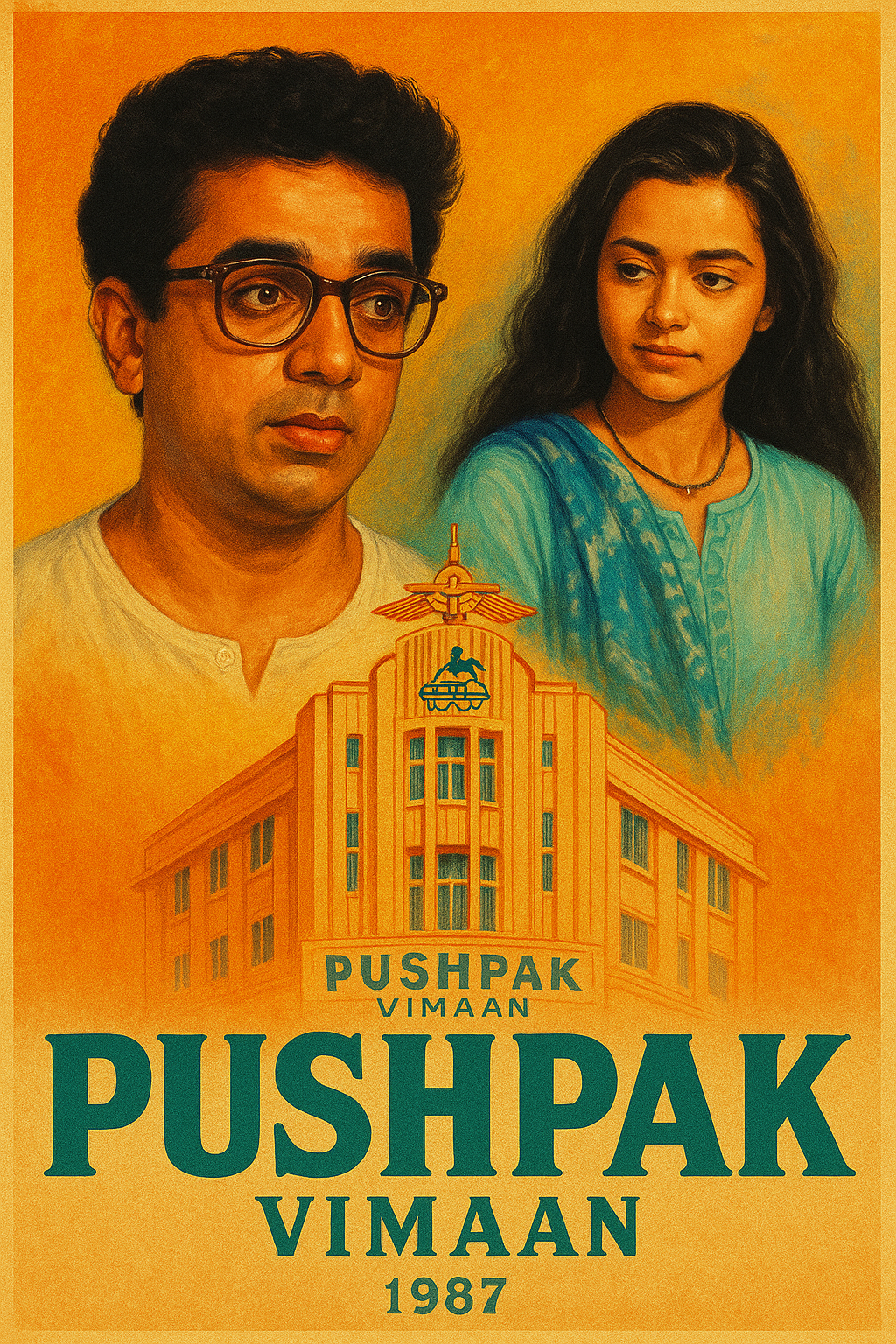
“Silent film” often triggers a reaction closely associated with boredom. In the era of Superhuman movies, every second needs a twist. But 1987’s Pushpak (also known as Pushpaka Vimana) is here to challenge that assumption — and how!
Directed by Singeetam Srinivasa Rao, and starring Kamal Haasan and Amala Akkineni, Pushpak is a cinematic gem that blends black comedy, visual storytelling, and social commentary. It is technically not a silent film as it has no dialogues, but the use of ‘silence’ in the film is a unique film in the Indian cinema history.
Symbolism and Layers: Every Frame a Metaphor
Pushpak is filled with layered visual metaphors and symbolism:
- Karl Marx poster on the protagonist’s wall signifies class struggle. When Kamal Hassan ends up imprisoning the rich, creating a brilliant irony, it highlights a different kind of irony.
- Bodybuilder and action star posters reflect the protagonist’s aspiration for power and masculinity.
- Mirrors in the hotel symbolize self-reflection and duality of identity.
- The Ice Dagger is perhaps the most poetic symbol in the film. It represents cold-blooded violence and its impermanence. Like crime melting into nothingness, it leaves no evidence , just like human insensitivity.
- The title “Pushpak Viman” is a direct reference to the mythological flying chariot used by Ravana. Here, the hotel becomes a modern-day Pushpak, a space of luxury, illusion, identity exchange, and moral descent.
Every character, from beggars to magicians, exists on a symbolic plane.
Choreographing Silence: The Craft Behind the Film
Creating a silent film is one thing. Making it entertaining, cinematic, and engaging without words is a feat. Pushpak does this through its production design, scene choreography, and mise-en-scène.
Every shot is meticulously crafted. Props, facial expressions, timing, and setting do all the talking. The absence of dialogue is not a limitation. it’s a creative strength.
Kamal Haasan: The Master of Micro-Expressions
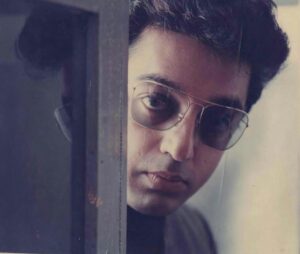
No praise is enough for Kamal Haasan’s performance. With no dialogues to rely on, he uses micro-expressions, body language, and gestures to deliver one of the finest performances of his career.
Director Singeetam Srinivasa Rao called this role a tribute to Charlie Chaplin’s “The Tramp” especially from City Lights (1931). And Kamal truly lives up to that legacy.
Music: The Language of Emotion
Though the film is silent, it’s not soundless.
The background score by L. Vaidyanathan is haunting, witty, emotional and most importantly, never overpowering. It guides the audience emotionally, whispering where needed, and screaming only when absolutely necessary.
Awards and Legacy
Pushpak won the National Film Award for Best Popular Film Providing Wholesome Entertainment — a rare feat for a dialogue-less movie. Its legacy continues to inspire filmmakers, writers, and visual artists who believe in the power of cinema beyond words.
Even the legendary Satyajit Ray reportedly appreciated the film’s brilliance.




+ There are no comments
Add yours